
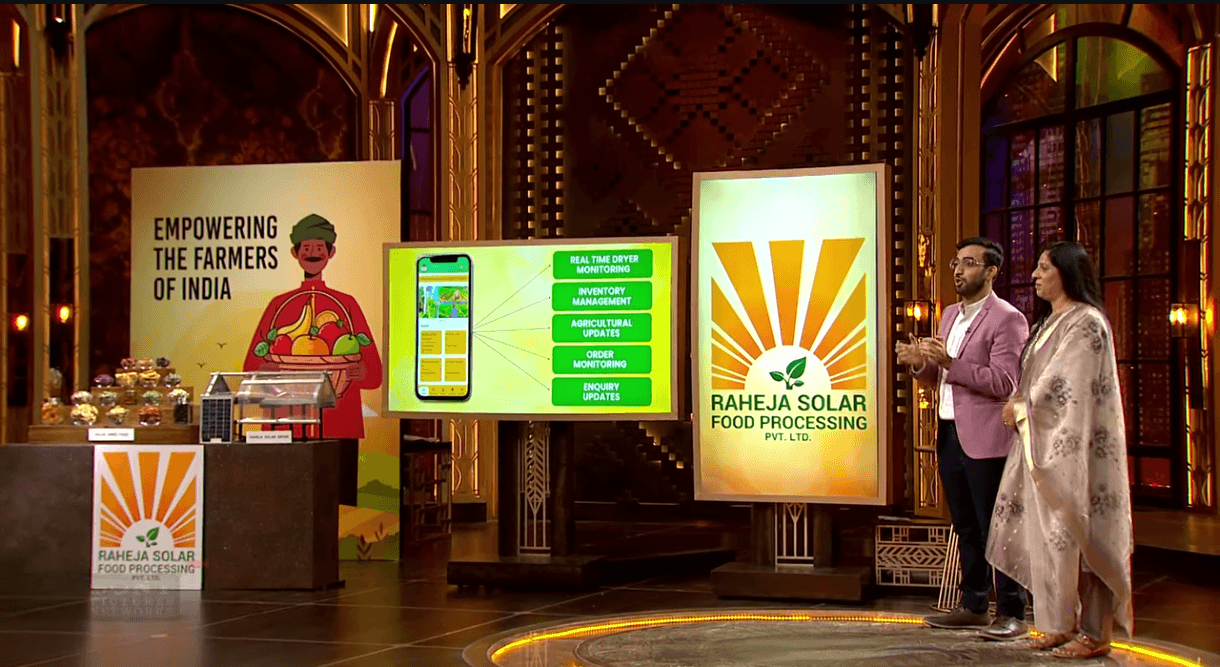
Shark Tank India has seen its fair share of revolutionary ideas, but this time, it wasn’t just about making money—it was about saving ₹90,000 crores worth of food from going to waste! Raheja Solar Food Processing Ltd walked into the Tank with a mission to change the way India processes surplus fruits and vegetables. But did the Sharks see the true potential in this game-changing idea? Let’s dive in!
The Problem: India’s Shocking Food Wastage
Have you ever wondered what happens to fruits and vegetables that fall from trees or the ones that wholesalers reject? Most of them go to waste—and according to Raheja Solar’s founders, India loses ₹90,000 crores worth of produce every year. That’s an alarming amount of food wastage that could otherwise be preserved and used!
The Solution: Solar-Powered Food Processing
Raheja Solar Food Processing Ltd has come up with a cost-effective and sustainable way to prevent this wastage—solar-powered dryers! Unlike traditional drying methods like electric drying or freezing, solar drying uses no electricity and helps retain 70-80% of nutrients. The dried produce also gets a shelf life of up to one year, making it easier to store and distribute.

But that’s not all—they’re not just selling dried food. They are empowering farmers by selling these solar dryers so that farmers can dry their unsold produce and sell it in the market instead of throwing it away. This not only reduces wastage but also creates a new source of income for farmers.
The Numbers: Impressive Growth & Farmer Impact
Raheja Solar isn’t just about a great idea—it has the numbers to prove its success:
- Tied up with big names like Tata Trust to subsidize machines for farmers.
- 65000+ farmers impacted by their technology.
- 7,000 solar drying machines sold.
- ₹18 crore in total sales so far.
- ₹7 crore revenue last year with 10% profit.
With strong profit margins and a social impact angle, this startup looked like a promising investment. But did the Sharks agree?
Shark Reactions: Who Backed Out & Who Invested?
🦈 Anupam Mittal & Aman Gupta:
- Thought the business was too small and required massive efforts to scale.
- Felt the founders lacked a vision for rapid expansion.
- Decided to back out, citing that the business was not “investor-friendly.”


🦈 Peyush Bansal, Vineeta Singh & Kunal Bahl:
- Saw the potential in the concept and the growing market for food preservation.
- Believed that helping farmers and sustainability could be a unique USP.
- Were willing to invest, but only if they could join forces to bring strategic guidance.


After a series of negotiations, the founders secured a deal with all three Sharks!
The Deal:
💰 Original Ask: ₹50 lakhs for 1% equity.
💰 Final Offer: ₹1.75 crores for 4.38% equity + 2.63% advisory equity.
Why This Deal Stands Out
Unlike typical startups focusing solely on profits, Raheja Solar is solving a massive real-world problem while generating revenue. The business is:
- Sustainable (Solar-powered, zero electricity waste!)
- Socially impactful (Helping thousands of farmers!)
- Profitable & Scalable (Already generating revenue and expanding!)
By investing in solar food processing, the Sharks are not just betting on a startup—they are betting on India’s agricultural future.
Final Verdict: Did the Sharks Get It Right?
The deal looked promising, but with Anupam & Aman backing out, it raises the question—Did they miss out on a billion-dollar opportunity, or was this a risky bet?
What do you think? Should Raheja Solar go big or focus on grassroots impact? Drop your thoughts below!
Disclaimer: The figures and details mentioned in this blog are based on publicly available information and the founder’s pitch on Shark Tank India Season 4. This blog has been created with the assistance of Deepseek, ChatGPT and Gemini.
