
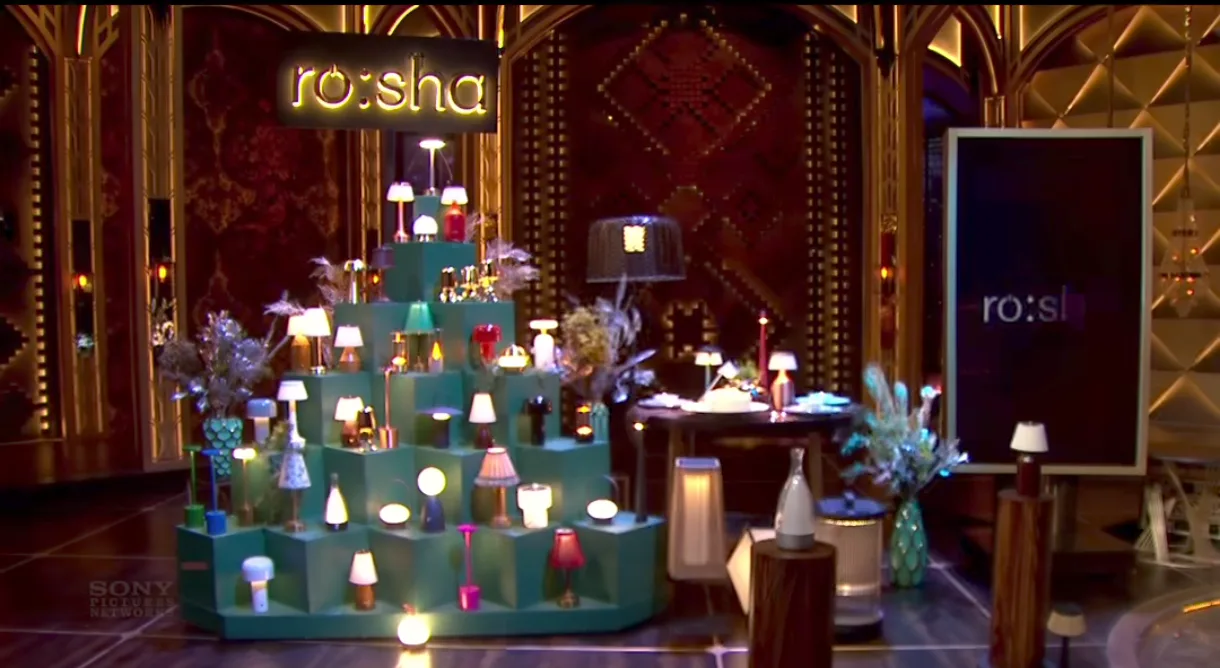
The Shark Tank India pitch by Rosha, a brand specializing in portable, wireless lighting solutions, was supposed to be about innovation and scalability. Instead, it turned into one of the most contentious moments of the season, sparking a heated debate about whether the Sharks crossed the line into exploitation during negotiations. The most vocal critic? Namita Thapar, who didn’t hold back in accusing her fellow Sharks of exploiting the young founders.
Rosha: Lighting the Way, Wire-Free
Rosha brought to the Tank a unique concept—portable, wireless lamps and lights that eliminate the hassle of wires. With over 100+ designs, solar-powered options, and a focus on B2B sales to the HORECA (Hotels, Restaurants, Cafes) sector, the brand stood out.

Their performance numbers were equally impressive:
- Last year’s revenue: ₹8 crores
- This year’s target: ₹16 crores
- Profit margin: 15%
- Average selling price: ₹2,500

Their ask? A confident ₹60 lakhs for 1% equity, valuing Rosha at ₹60 crores.
The Sharks’ Feedback
Anupam Mittal

Anupam appreciated the passion but expressed concerns about scaling a B2B business. He offered ₹60 lakhs for 3% equity with an additional 1.5% royalty on sales until the investment was recovered.
Aman Gupta

Aman questioned why Rosha hadn’t ventured into the B2C market, which he believed could unlock more opportunities. He matched Anupam’s offer but reduced the equity to 2% with royalty.
Peyush Bansal

Peyush praised the product’s quality but opted out, stating that while the B2B focus was sound, the market size wasn’t compelling enough to warrant investment.
Namita Thapar

Namita admired the brand’s profitability but raised concerns about its defensibility, citing the ease of entering the market. Her critique, however, sharpened when the Sharks revised their terms mid-discussion.
Ritesh Agarwal

Ritesh admired the founders’ family-driven values and joined Anupam’s offer, adding his voice to the group demanding royalty on future sales.
The Deal Takes a Turn
The pitch took a dramatic twist when the Sharks collectively revised their offer to ₹60 lakhs for 10% equity and 2% royalty until 1.5x the investment was recouped.
Namita, observing the aggressive shift, called out her fellow Sharks for exploiting the founders. She argued that the revised terms were far from supportive and didn’t align with the Sharks’ supposed mission of fostering entrepreneurship. Her strong stance added fuel to an already tense negotiation.
The Founders Fight Back
The Rosha founders attempted to regain control by countering with an offer exclusively for Aman, sidelining Anupam. Offended by the move, Anupam withdrew entirely, leaving Aman and Ritesh to renegotiate.
The Final Deal
After multiple rounds of back-and-forth, the founders agreed to Aman and Ritesh’s final offer:
- ₹60 lakhs for 4% equity
- An additional 1.5% equity until ₹90 lakhs were recouped
Though the deal was ultimately sealed, the process left a sour taste, with many questioning the fairness of the negotiations.
Was This Tough Negotiation or Exploitation?
Namita’s call-out added a layer of controversy to the episode, highlighting the fine line between tough negotiation and exploitation. While some believed the Sharks were simply being cautious and strategic, others sided with Namita, arguing that the aggressive terms undermined the founders’ efforts and vision.
The Rosha episode has reignited debates about ethical investment practices on Shark Tank India. Did the Sharks push too far? Or was it just business as usual?
Join the conversation on Brands pe Charcha and let us know your take!
